

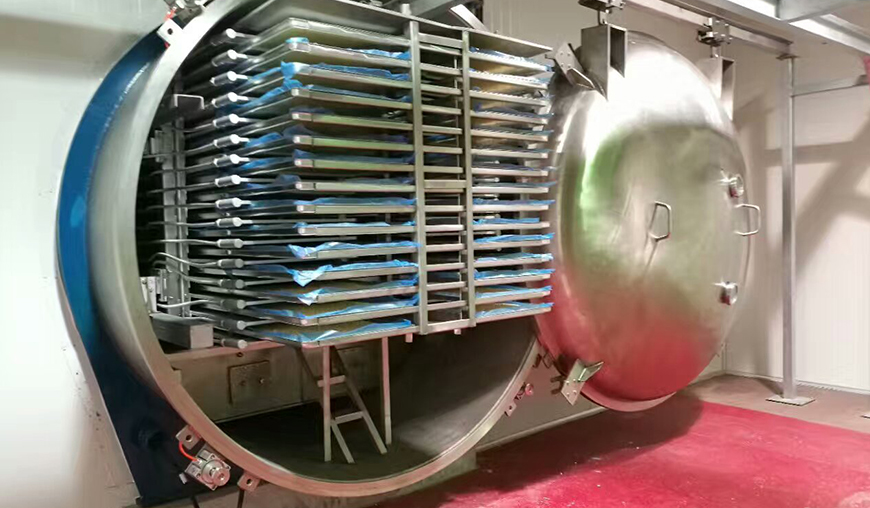
Industrial pet food freeze drying equipment plays a critical role in the fast‑growing segment of
freeze dried pet food and freeze dried pet treats.
For manufacturers, choosing the right
industrial pet food freeze drying equipment supplier directly affects product quality,
production efficiency, food safety, and overall profitability.
This page provides an in‑depth, supplier‑neutral overview of industrial freeze drying systems for pet food,
including definitions, process descriptions, advantages, technical specifications, comparison tables, and
key selection criteria. The content is designed for manufacturers, brand owners, investors, and engineers
who are planning or upgrading industrial freeze dried pet food production lines.
Industrial pet food freeze drying equipment is a large‑scale vacuum dehydration system designed specifically
for pet food and pet treats. The equipment removes moisture from raw or cooked ingredients at low temperatures
under vacuum, transforming fresh meat, organs, vegetables, fruits, or complete formulations into stable
freeze dried pet products with extended shelf life.
In the pet industry, these systems are also referred to as:
Although designs vary by manufacturer, most industrial pet food freeze drying equipment supplied to large
factories includes the following core modules:
Freeze drying, or lyophilization, is a dehydration process that removes water by first freezing the product
and then reducing the surrounding pressure to enable the frozen water in the material to sublimate directly
from solid to vapor. This low‑temperature process helps preserve:
| Process Stage | Key Parameter | Typical Range (Pet Food) | Purpose |
|---|---|---|---|
| Pre‑Freezing | Product temperature | -30 °C to -45 °C | Ensure complete solidification of water. |
| Vacuum Level | Chamber pressure | 0.05 to 1.0 mbar | Enable ice sublimation at low temperature. |
| Primary Drying | Shelf temperature | -10 °C to +20 C (depending on product) | Supply energy for sublimation without melting. |
| Secondary Drying | Shelf temperature | +20 °C to +50 C | Remove residual bound moisture. |
| Final Product | Residual moisture | 2–8% (product‑dependent) | Achieve shelf‑stable pet food with desired texture. |
The rapid growth of freeze dried dog food, cat food, and pet treats is largely driven by the inherent advantages
of the industrial pet food freeze drying process. When evaluating an industrial pet food freeze
drying equipment supplier, it is useful to understand how the technology benefits both producers and end users.
Different equipment configurations exist to meet diverse production capacities, automation levels, and product forms.
Understanding the main types helps in communicating with a potential industrial pet food freeze drying equipment supplier.
Batch freeze drying systems are the most common configuration for pet food and pet treat manufacturers.
They consist of one or more large vacuum chambers loaded with product on trolleys or racks.
Continuous or semi‑continuous industrial freeze drying equipment for pet food uses conveyors or automatic
tray handling systems to reduce manual labor and improve throughput.
Pilot‑scale Pet Food Freeze Dryers replicate industrial conditions on a smaller scale.
They are typically used for:
When evaluating any industrial pet food freeze drying equipment supplier,
it is important to compare detailed technical specifications. These parameters impact cycle duration,
energy efficiency, product quality, and long‑term operating cost.
| Parameter | Description | Typical Range for Pet Food |
|---|---|---|
| Loading capacity (fresh product) | Maximum fresh product weight per batch or per hour. | 500 kg to >5000 kg per batch; 100 kg/h to >1000 kg/h continuous. |
| Number of shelves | Number of product shelves in each chamber. | 10 to 60+ shelves depending on chamber size. |
| Shelf area | Total usable surface area for product placement. | 10 m² to 200+ m² per chamber. |
| Chamber internal volume | Overall space inside each freeze drying chamber. | 2 m³ to 100+ m³ per unit. |
| Parameter | Importance in Pet Food Freeze Drying | Typical Specification |
|---|---|---|
| Minimum shelf temperature | Determines freezing capability and achievable product temperature. | -40 °C to -60 °C |
| Maximum shelf temperature | Impacts secondary drying efficiency and cycle time. | +60 °C to +80 °C |
| Condenser temperature | Lower condenser temperature improves water vapor capture. | -40 °C to -80 °C |
| Ultimate vacuum | Lowest pressure the system can reliably reach and maintain. | <0.05 mbar (5 Pa) for high‑performance units. |
| Pressure control range | Stable pressure control helps maintain product quality. | 0.05 to 1.0 mbar typical operating window. |
Industrial freeze drying is energy‑intensive. Understanding utility requirements supports realistic cost modeling.
| Utility | Key Factors | Considerations When Comparing Suppliers |
|---|---|---|
| Electric power | Drives compressors, vacuum pumps, controls, and auxiliary systems. | Check installed capacity (kW), typical operating consumption (kWh/batch), and energy‑saving options. |
| Cooling water / glycol | Removes heat from condensers and compressors. | Confirm required flow rate, inlet temperature, and pressure; consider closed‑loop systems. |
| Steam or thermal oil | Provides shelf heating for sublimation and desorption. | Compare heating medium, maximum temperature, and integration with central boiler systems. |
| Compressed air | Actuates valves and pneumatic components. | Check required pressure, air quality, and consumption rate. |
Horizontal chamber freeze dryers are widely used for industrial freeze dried pet food. They offer convenient
access for loading carts and trolleys and can be installed in lines where material flows in a straight path.
Vertical designs are sometimes chosen when floor space is limited, or when gravity‑assisted loading/unloading
is advantageous in a multi‑level facility.
Multiple freeze drying chambers connected to a centralized utility infrastructure enable staggered batches
and higher overall throughput. A multi‑chamber system can combine:
| Configuration | Typical Use Case | Benefits | Challenges |
|---|---|---|---|
| Single large chamber | Entry‑level or pilot production, or simple lines. | Lower initial complexity; easier to install and operate. | Downtime affects all capacity; less scheduling flexibility. |
| Two‑chamber system | Medium‑scale pet treats and specialized products. | Better utilization; overlapping batches; higher uptime. | Higher capital cost; more complex utilities. |
| Multi‑chamber (3+) | Large‑scale freeze dried pet food factories. | High throughput; flexible batch management; redundancy. | Complex installation; advanced control and coordination required. |
Because pet food is a regulated food category, industrial pet food freeze drying equipment suppliers must
adhere to strict hygiene and sanitation requirements. Equipment design directly affects microbial control,
cleaning time, and contamination risk.
| Aspect | Typical Approach in Pet Food Freeze Dryers | Impact on Operations |
|---|---|---|
| Cleaning‑in‑Place (CIP) | Automated circulation of detergents and rinse water inside chambers and piping. | Reduces manual labor; improves cleaning consistency. |
| Sanitizing / SIP | Optional steam or chemical sanitizing after cleaning. | Supports microbiological control and regulatory compliance. |
| Validation protocols | Standardized cleaning cycles, swab tests, and documentation. | Supports audits by retailers and certification bodies. |
Selecting an industrial pet food freeze drying equipment supplier is a long‑term strategic decision.
The equipment has a long service life, so it is essential to evaluate both technical and business aspects.
| Cost Category | Components | Impact on Business |
|---|---|---|
| Initial Capital Investment | Equipment purchase, installation, building modifications, utilities. | Determines payback period and financing requirements. |
| Operating Costs | Electricity, cooling, steam, compressed air, labor, cleaning agents. | Influences cost per kg of freeze dried pet food. |
| Maintenance Costs | Spare parts, scheduled servicing, unexpected repairs. | Affects system uptime and reliability. |
| Downtime | Production losses due to malfunctions or long changeovers. | Can heavily impact delivery commitments and brand reputation. |
An industrial freeze drying system for pet food is one part of a larger, integrated production line.
Planning the overall layout and workflow is essential.
To maintain the low moisture achieved by freeze drying, the unloading and packaging areas must be carefully controlled:
The following example specification table illustrates the kinds of data often provided by an
industrial pet food freeze drying equipment supplier. Actual values will differ according to supplier and project.
| Specification Item | Example Value (Model A) | Example Value (Model B) | Notes for Pet Food Manufacturers |
|---|---|---|---|
| Fresh product capacity per batch | 1000 kg | 3000 kg | Determine based on production forecast and SKU mix. |
| Total shelf area | 80 m² | 220 m² | Shelf area limits how much product can be dried per cycle. |
| Number of shelves | 20 | 40 | More shelves enable more layers of trays, affecting loading methods. |
| Shelf temperature range | -45 °C to +65 °C | -55 °C to +75 °C | Wider range improves flexibility for various pet food formulations. |
| Condenser capacity | 800 kg ice/batch | 2400 kg ice/batch | Must match or exceed expected moisture removal per batch. |
| Ultimate vacuum | 0.05 mbar | 0.03 mbar | Lower ultimate vacuum can reduce drying time for some products. |
| Average cycle time | 18–24 h | 18–30 h | Depends on product thickness, moisture content, and recipe. |
| Installed electric power | 220 kW | 600 kW | Important for plant electrical planning and operating cost estimation. |
| Chamber internal dimensions (L×W×H) | 6.0 × 2.5 × 2.5 m | 9.0 × 3.0 × 3.0 m | Check compatibility with existing building and doors. |
| Material of construction (product contact) | Stainless steel 304 | Stainless steel 316L | Higher alloy grades may be preferred for corrosive or salty ingredients. |
| CIP system | Optional | Standard | CIP can significantly reduce cleaning time and labor. |
| Control interface | PLC + 10" HMI | PLC + 15" HMI + SCADA | Consider ease of use and connectivity to existing control systems. |
| Batch recording and traceability | Basic data logging | Advanced data logging with export | Important for quality management and regulatory audits. |
A high‑quality industrial pet food freeze drying equipment supplier typically assists with process optimization.
Key optimization steps include:
Well‑optimized freeze drying cycles can substantially reduce production costs and increase throughput
without compromising the quality of freeze dried pet food.
Industrial pet food freeze drying equipment must comply with both general industry standards and
food‑specific regulations. While specific requirements vary by region, some common aspects include:
Freeze dried pet food manufacturers should work with their internal quality and regulatory teams to ensure
that selected equipment supports all required certifications and audits demanded by retailers and authorities.
The freeze dried pet food market is evolving quickly, and
industrial pet food freeze drying equipment suppliers are innovating to meet new demands.
Before engaging with a potential supplier, it is helpful to prepare a concise project brief.
The following checklist can streamline discussions and lead to more accurate proposals.
| Information Item | Details to Provide |
|---|---|
| Product types | Dog food, cat food, single‑ingredient treats, complete meals, toppers, etc. |
| Annual production target | Expected total volume of freeze dried pet food (tons/year). |
| Batch vs. continuous preference | Desired operation mode and rationale. |
| Available floor space and building constraints | Layout drawings, ceiling height, door dimensions. |
| Available utilities | Electrical supply, steam, cooling water, compressed air, etc. |
| Hygiene and cleaning requirements | Need for CIP, sanitizing protocols, allergen segregation. |
| Automation and integration | Required level of automation, connection to existing SCADA/MES. |
| Local regulatory environment | Applicable codes and certificates needed for installation and operation. |
| Project timeline | Expected decision date, installation window, and start‑up target. |
| Budget range | Approximate investment range to guide equipment configuration. |
Industrial pet food freeze drying equipment is at the heart of modern
freeze dried pet food production. Selecting a suitable
industrial pet food freeze drying equipment supplier requires a clear
understanding of the freeze drying process, equipment configurations, technical specifications,
sanitary design requirements, and long‑term cost implications.
By comparing capacity, temperature and pressure performance, energy consumption, automation features,
hygiene standards, and service capabilities, pet food manufacturers can make informed decisions
that support reliable, safe, and profitable freeze dried pet food operations.
As the global market for freeze dried dog food, cat food, and premium pet treats continues to expand,
investing in robust, efficient, and well‑designed industrial freeze drying equipment will remain a
strategic priority for brands seeking to differentiate their pet nutrition offerings.
```
This website uses cookies to ensure you get the best experience on our website.
 Español
 Pусский
 Français
 العربية



 WhatsApp
 Phone
Phone
Comment
(0)