

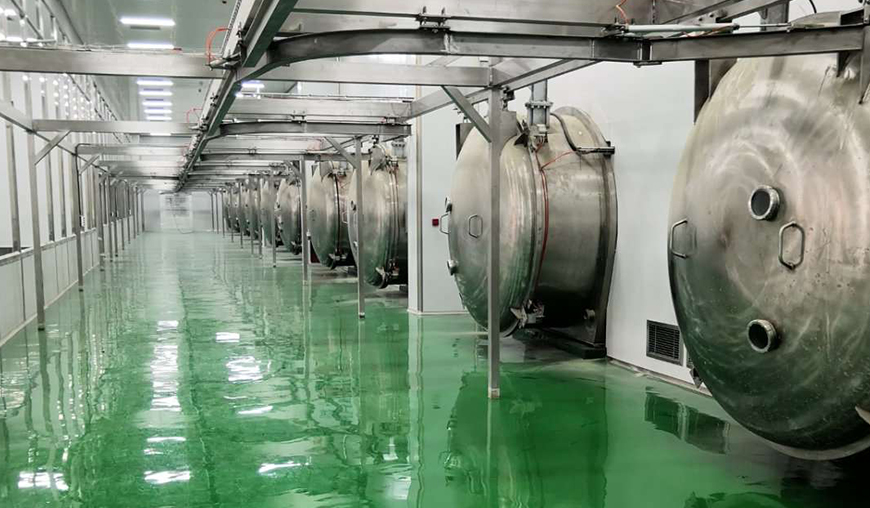
Vacuum freeze drying, also known as lyophilization, is one of the most effective technologies for preserving the
nutritional value, flavor, color and structure of foods and biological materials. By combining freezing and
drying under vacuum, the method removes water with minimal damage to heat‑sensitive nutrients.
This in‑depth guide explains how vacuum freeze drying works, why it is superior to conventional drying for nutrient
retention, and which technical parameters influence nutritional quality.
Vacuum freeze drying is a low‑temperature dehydration process in which frozen water in a product is removed
by sublimation (ice turning directly into vapor) under reduced pressure. Because liquid water is largely
bypassed, the method maintains the original structure and biochemical composition of the material far better than
heat‑based drying.
In a conventional drying process, free water is first evaporated at the surface at relatively high temperatures. This
can cause:
By contrast, vacuum freeze drying uses three key principles to overcome these issues:
the product temperature stays low.
Because the entire process takes place at temperatures typically between −50 °C and +40 °C depending on the stage,
most temperature‑sensitive nutrients remain intact.
A complete vacuum freeze drying cycle usually includes three main stages:
the final low moisture content.
| Stage | Typical Temperature Range | Typical Pressure Range | Main Objective |
|---|---|---|---|
| Freezing | From ambient down to −40 °C to −60 °C | Atmospheric or slight vacuum | Solidify water, form uniform ice crystals, immobilize solutes |
| Primary Drying | Product usually −30 °C to 0 °C | 0.01 to 1 mbar (1–100 Pa) | Remove most free water by sublimation with minimal structural damage |
| Secondary Drying | 0 °C to +40 °C (sometimes higher for robust products) | Similar vacuum or lower | Desorb bound water, reduce residual moisture to shelf‑stable level |
These carefully controlled conditions are fundamental to explaining how vacuum freeze drying preserves nutritional
value across a wide range of food and pharmaceutical applications.
The nutritional quality of food depends on the retention of:
Many of these components are sensitive to heat, oxygen, water activity, pH and light. Drying methods differ
dramatically in how they affect these factors.
| Drying Method | Typical Temperature | Atmosphere | Impact on Nutrients | Typical Nutrient Retention (Vitamins & Bioactives) |
|---|---|---|---|---|
| Sun Drying | Ambient, fluctuating, often >40 °C | Open air, oxygen exposure, light | Slow, high oxidation, significant vitamin loss, color degradation | Low to moderate (often <50 % for sensitive vitamins) |
| Hot Air / Convective Drying | 50–90 °C, sometimes higher | Air, high oxygen exposure | Thermal degradation, nutrient breakdown, texture collapse | Moderate (~40–70 % depending on product and vitamin) |
| Spray Drying | Inlet air 150–220 °C, outlet lower | Air or inert gas | Fast but high temperature, loss of volatiles, some vitamin destruction | Moderate to good for robust nutrients, poor for very heat‑sensitive ones |
| Vacuum Drying (non‑frozen) | 30–80 °C | Reduced pressure, less oxygen | Less thermal and oxidative damage than hot air, but still liquid phase heating | Moderate to good, but texture can be compromised |
| Vacuum Freeze Drying | Usually −40 °C to +40 °C, mostly below 0 °C | Vacuum, minimal oxygen | Very low thermal damage and oxidation, structure preserved | High (>80–95 % for many vitamins and bioactives, if process‑optimized) |
Because vacuum freeze drying combines low temperature and low oxygen exposure, it is especially effective at
preserving sensitive nutrients such as:
Many vitamins degrade according to temperature‑dependent kinetic models (often first‑order reactions). Even relatively
short exposure to high heat can sharply reduce vitamin content. In vacuum freeze drying:
This explains why freeze‑dried fruits, vegetables and herbs often have much higher vitamin C and antioxidant activity
compared with their hot‑air‑dried counterparts.
Oxidation is another major cause of nutritional loss, affecting:
By operating under vacuum and at low temperatures, vacuum freeze drying:
As a result, lipid oxidation and pigment degradation are minimized, preserving both nutritional quality and
sensory attributes.
Nutrient stability is also influenced by the physical matrix surrounding them. Collapsed, dense structures can expose
reactive sites to oxygen and light, while a well‑preserved porous matrix can offer protective encapsulation.
Vacuum freeze drying:
For example, in fruits and vegetables, intact cell walls and membranes help stabilize certain antioxidants and
pigments, leading to higher retained nutritional value during storage.
Vitamins are often used as indicators of drying severity. While exact retention values depend on raw material, cutting
size, formulation and process control, typical trends for vacuum freeze drying are shown below.
| Vitamin | Sensitivity | Approximate Retention with Vacuum Freeze Drying (Under Optimized Conditions) | Comments |
|---|---|---|---|
| Vitamin C (Ascorbic Acid) | Very heat and oxidation sensitive | 70–95 % | One of the most protected vitamins in freeze‑dried fruits; loss mainly due to oxidation during processing and storage |
| Vitamin A and Carotenoids | Sensitive to heat, light and oxygen | 70–90 % | Better retention than in hot‑air drying due to low temperature and limited oxygen |
| Vitamin E (Tocopherols) | Oxidation sensitive | 80–95 % | High retention in fatty foods and nuts when properly packaged after drying |
| B‑Group Vitamins (e.g., B1, B2, B6, B12) | Moderate heat sensitivity; some light sensitivity | 75–98 % | Generally well preserved in freeze‑dried dairy, meat and cereal products |
| Vitamin K | Moderate sensitivity | 80–95 % | Limited data, but low thermal stress favors retention |
| Vitamin D | Relatively stable | >90 % | Commonly used in fortified freeze‑dried powders and supplements |
These values are broad ranges. Actual retention depends on pre‑treatments (e.g., blanching), formulation (antioxidants,
chelating agents) and storage conditions (oxygen, light, temperature).
Proteins are susceptible to:
In vacuum freeze drying:
As a result, overall protein content and amino acid composition are largely preserved. Functional properties such
as foaming, emulsification and solubility are often better maintained compared with high‑heat drying, which is important
for:
Unsaturated fats, especially omega‑3 and omega‑6 fatty acids, are highly prone to oxidation, leading to:
Vacuum freeze drying helps preserve lipids by:
After drying, proper packaging (e.g., oxygen‑barrier films, nitrogen flushing) is essential to maintain the high lipid
nutritional quality achieved by freeze drying.
Minerals such as calcium, iron, zinc, magnesium and potassium are generally stable to heat and not lost through
evaporation. For this reason, mineral retention is usually high in almost any drying method, including vacuum freeze
drying.
Key advantages of vacuum freeze drying for minerals include:
In most cases, mineral content in freeze‑dried products is close to that of the original raw material on a dry basis.
Many plant foods are valued for their phytochemicals, including:
These compounds often show:
Vacuum freeze drying has been shown in numerous studies to maintain higher total phenolic content and antioxidant
capacity compared with convective air drying, given:
Even though vacuum freeze drying is inherently gentle, nutritional value can still be affected by sub‑optimal process
design. Key variables include:
The freezing step determines:
| Freezing Strategy | Ice Crystal Characteristics | Effect on Structure & Nutrients |
|---|---|---|
| Very Fast Freezing | Many small crystals | Better microstructural preservation, shorter drying paths; however, may trap solutes and slightly increase resistance to mass transfer |
| Moderate Controlled Freezing | Balanced crystal size | Often optimal compromise between structural preservation and efficient sublimation |
| Slow Freezing | Fewer, larger crystals | Greater mechanical damage to cells, potential leakage of cell contents, higher risk of nutrient oxidation post‑thaw or during early drying |
Controlled freezing is therefore critical for:
In primary drying, the shelf temperature and chamber pressure determine:
| Parameter | Typical Range | Influence on Nutritional Value |
|---|---|---|
| Shelf Temperature | −30 °C to +10 °C during primary drying (depending on formulation) | Higher shelf temperatures speed up drying but may raise product above safe temperature, causing structural collapse and localized nutrient degradation |
| Chamber Pressure | 0.05 to 0.5 mbar typical; may vary | Lower pressure promotes sublimation at lower temperatures; too low or too high pressure can reduce process efficiency |
| Product Temperature | Controlled indirectly via shelf temperature and pressure | Key variable for vitamin stability and enzyme inactivation; aim is to keep below critical point while ensuring adequate drying rate |
Advanced control strategies, sometimes using product temperature probes and dynamic pressure control,
help optimize nutrient preservation and energy efficiency simultaneously.
Secondary drying removes adsorbed and bound water. For good shelf stability, final moisture content is typically:
Secondary drying often uses slightly higher shelf temperatures (e.g., 20–40 °C). The impact on nutrients is generally
modest, but:
Balancing final moisture, temperature, and storage packaging is therefore essential for long‑term nutritional stability.
Pre‑processing steps significantly influence nutrient retention:
processing and storage.
When carefully designed, these pre‑treatments enhance the already high nutritional preservation of vacuum freeze drying.
The core advantage is the exceptionally high retention of heat‑sensitive bioactive compounds. Product categories
that particularly benefit include:
Color and flavor are important indicators of product quality and consumer acceptance. Vacuum freeze drying:
Because sensory quality is closely linked with the presence of intact bioactive compounds, better color and aroma often
correlate with better nutritional preservation.
Freeze‑dried products typically rehydrate quickly and nearly completely, which:
fruit powders).
Due to:
Freeze‑dried products often achieve long shelf life without the need for high levels of preservatives. This supports
clean‑label product development while maintaining nutritional value.
For supplements, medical nutrition and ingredient applications, vacuum freeze drying allows:
Specifications vary by product type, but many freeze‑dried foods share certain target characteristics aimed at preserving
nutritional value, safety and sensory quality.
| Specification Parameter | Typical Range for Freeze‑Dried Foods | Relevance to Nutritional Value |
|---|---|---|
| Moisture Content | 1–5 % | Low moisture slows enzymatic and microbial activity, protecting nutrients over time. |
| Water Activity (aw) | 0.1–0.3 | Very low water activity inhibits most microbial growth and many chemical reactions. |
| Residual Oxygen in Package | <2 % (with oxygen scavengers or nitrogen flushing) | Low oxygen reduces oxidation of vitamins, pigments and fatty acids. |
| Bulk Density | Low, highly porous structure | Promotes rapid rehydration and gentle handling of cell structures, preserving nutrient access. |
| Color Parameters (e.g., L, a, b) | Close to fresh product values | Indirect quality markers associated with pigment and phytochemical retention. |
| Vitamin Content | High percentage of initial content (product‑specific) | Direct indicator of gentle processing and nutritional preservation. |
| Microbial Load | Low; compliant with relevant food safety standards | Ensures safe long‑term storage without compromising nutritional components. |
Freeze‑dried fruits and vegetables are widely used in:
For these applications, vacuum freeze drying offers:
Milk, yogurt, cheese and whey proteins benefit from freeze drying due to:
In infant formula and medical nutrition, accurate nutrient retention is especially important, making vacuum freeze
drying a preferred choice for certain premium and specialized products.
High‑protein foods such as meat, fish and eggs can be vacuum freeze dried to produce:
The low‑temperature process protects:
Vacuum freeze drying is used for:
Here, key benefits include:
Many bioactive ingredients and pharmaceutical products are extremely sensitive to heat and moisture. Vacuum freeze
drying is widely used for:
In these applications, the goal is not only to preserve nutritional or therapeutic value, but also to:
While vacuum freeze drying offers outstanding nutritional preservation, some limitations should be considered:
The dried product is usually:
This can be an advantage (for instant rehydration), but requires:
Although freeze drying provides excellent initial nutritional preservation, storage conditions remain crucial:
Different foods respond differently because of:
As a result, process parameters must be tailored to each product to optimize nutrient retention and physical stability.
| Mechanism | How It Works | Effect on Nutritional Value |
|---|---|---|
| Low Temperature Dehydration | Water removed by sublimation at sub‑zero or low positive temperatures | Minimizes heat‑induced degradation of vitamins, enzymes and bioactives |
| Vacuum Environment | Reduced pressure and minimal oxygen around product | Reduces oxidation of fats, pigments and sensitive vitamins (e.g., vitamin C) |
| Structural Preservation | Freezing immobilizes solutes, porous matrix formed during sublimation | Maintains cellular integrity and matrix effects that help stabilize nutrients |
| Low Water Activity in Final Product | Residual moisture usually 1–5 % with very low aw | Inhibits microbial activity and slows many chemical degradation reactions |
| Controlled Process Parameters | Careful management of freezing, shelf temperature and chamber pressure | Prevents melting, collapse and localized overheating that could destroy nutrients |
By combining gentle thermal conditions with a vacuum‑driven sublimation process, vacuum freeze drying ranks among
the most effective technologies for preserving nutritional value in foods, nutraceuticals and pharmaceutical products.
It offers:
For manufacturers and brand owners focusing on premium quality and functional benefits, vacuum freeze drying provides a
robust and scientifically supported method to deliver products with maximum nutritional integrity.
```
This website uses cookies to ensure you get the best experience on our website.
 Español
 Pусский
 Français
 العربية



 WhatsApp
 Phone
Phone
Comment
(0)