

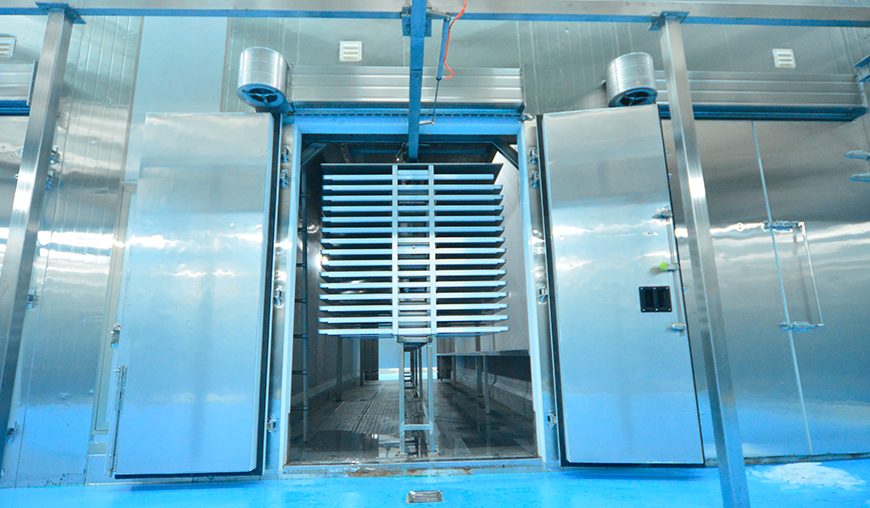
Freeze dryer equipment for herbal and health products is becoming a core technology in modern
nutraceutical and botanical processing. By combining low-temperature dehydration with vacuum
conditions, freeze drying (also called lyophilization) protects sensitive active compounds while
producing highly stable, free‑flowing products with extended shelf life.
This comprehensive guide explains what herbal freeze dryer equipment is, how it works, why it is
advantageous for herbal and health products, and which key specifications and design factors
matter when selecting equipment for industrial, laboratory, or pilot‑scale applications.
Freeze dryer equipment for herbal and health products is specialized vacuum drying equipment
used to remove water from plant materials and functional health ingredients at low temperature
by sublimation. It is widely used for:
Unlike conventional hot air drying or spray drying, freeze drying removes ice directly as vapor
under vacuum, maintaining more of the original structure, color, flavor, and bioactive
constituents of the herbal raw material.
Freeze drying, also known as lyophilization, is a dehydration process in which water in the
product is first frozen and then removed by sublimation and desorption under vacuum. For herbal
and health products, this means:
The result is a freeze dried herbal product that retains:
Herbal and health product ingredients are highly sensitive to heat, oxygen, and moisture.
Freeze drying offers a gentle alternative to conventional drying methods and is especially
suitable for:
| Parameter | Freeze Dryer Equipment | Hot Air / Oven Drying | Spray Drying |
|---|---|---|---|
| Operating Temperature | Low (typically -40 °C to +40 °C) | Medium to high (40 °C–100 °C+) | High inlet air (150 °C–200 °C) |
| Retention of Heat‑Sensitive Actives | Excellent | Moderate to poor | Moderate |
| Aroma and Flavor Preservation | Very high | Low to moderate | Moderate |
| Nutrient Preservation | High | Medium | Medium |
| Product Porosity & Instant Rehydration | Excellent | Limited | Good (powder) |
| Shape & Structure Retention | Very good (3D structure maintained) | Often deformed or shrunk | Converts to powder only |
| Microbial Reduction | Good (low water activity) | Moderate | Moderate |
| Shelf Life | Long (if properly packed) | Shorter | Medium to long |
| Energy Consumption | Relatively high | Lower | Moderate |
| Capital Investment | High | Low to medium | Medium to high |
Freeze dryer equipment is versatile and can process a large variety of herbal and health‑related
materials, from raw leaves and roots to refined standardized extracts.
In pharmaceutical and medical herbal products, freeze dryer equipment is used for:
Freeze dryer equipment for herbal and health products operates on three main stages: freezing,
primary drying (sublimation), and secondary drying (desorption). These stages typically occur
in a controlled chamber with integrated refrigeration, vacuum, and heating systems.
Product Loading
Herbal materials or extracts are placed in trays, vials, bottles, flasks, or on shelves.
Uniform loading is essential to maintain consistent drying behavior.
Freezing Stage
The product is cooled at a controlled rate, often in the same chamber (in‑situ freezing) or
in a separate freezer (pre‑freezing). The objective is to solidify the water and create
ice crystals of suitable size:
Vacuum and Primary Drying
Once frozen, the chamber is evacuated by a vacuum pump to pressures typically below
the triple point of water. Shelf heating (through thermal plates or fluid‑circulated shelves)
provides controlled energy for sublimation. Ice in the product converts directly to vapor
and migrates to the condenser.
Secondary Drying
After the majority of ice is removed, bound water remains attached to herbal matrix.
Shelf temperature is gradually increased at low pressure to desorb this bound moisture
until the final target moisture content is achieved (often below 3–5% for herbal powders).
Backfill and Unloading
Once drying is complete, the chamber is backfilled with inert gas (often nitrogen) or
filtered air to atmospheric pressure. Dried herbal products are removed and typically
transferred immediately to a controlled packaging area to avoid moisture uptake.
| Component | Function in Herbal Freeze Drying |
|---|---|
| Drying Chamber | Houses product shelves, trays, or vials; maintains vacuum and controlled temperature. |
| Shelves / Product Holders | Support herbal materials and transfer heat uniformly to each batch. |
| Refrigeration System | Provides low temperature for freezing the product and cooling the condenser. |
| Vacuum System | Generates low pressure to enable sublimation; includes vacuum pump and valves. |
| Condenser (Cold Trap) | Captures water vapor as ice, preventing it from reaching the vacuum pump. |
| Heating System | Controls shelf temperature during primary and secondary drying phases. |
| Control System (PLC / HMI) | Monitors and controls temperature, pressure, and time; stores recipes and data. |
| Instrumentation | Includes temperature sensors, pressure gauges, moisture analyzers, and safety devices. |
| CIP / SIP Systems (optional) | Clean‑in‑Place and Sterilize‑in‑Place functions for high‑hygiene herbal applications. |
Freeze dryer equipment for herbal and health products can be classified by installation scale,
process mode, and level of automation.
Laboratory Freeze Dryers
Used for R&D, formulation development, and small sample production. They usually have:
Pilot‑Scale Freeze Dryers
Bridge the gap between lab and industrial production. Used for:
Industrial Freeze Dryers
Designed for continuous or large‑batch production of commercial herbal and health products:
Batch Freeze Dryers
Most common in herbal applications; all products are loaded and processed together, then
unloaded as a batch. Suitable for diverse formulas and frequent changeovers.
Continuous or Semi‑Continuous Freeze Dryers
Designed for high throughput with continuous feeding and discharge. More complex but
suitable for large‑scale standardized herbal ingredients.
Specific freeze dryer equipment specifications vary by manufacturer and model.
The following tables show typical ranges for key technical parameters in herbal
and health product applications.
| Parameter | Typical Range / Description |
|---|---|
| Installed Capacity | From a few kilograms per batch (lab) up to several tons per batch (industrial). |
| Shelf Area | 0.1 m² to 100+ m² depending on model and application. |
| Operating Pressure | Approx. 1–100 Pa (0.01–1 mbar) during primary drying. |
| Shelf Temperature Range | From about -50 °C (freezing) up to +80 °C (secondary drying). |
| Condenser Temperature | Typically between -40 °C and -85 °C. |
| Cooling Medium | Refrigerant system and/or chilled water or glycol solutions. |
| Heating Medium | Thermal oil, electrical heaters, or circulating fluid systems. |
| Control System | PLC with touchscreen HMI, recipe management, data logging, alarms. |
| Material of Construction (Product Contact) | Commonly stainless steel (e.g., 304 or 316L) for herbal and health products. |
| Surface Finish | Polished or electropolished for hygienic applications. |
| Compliance Options | Support for GMP, FDA, or similar regulatory expectations where required. |
| Category | Shelf Area (approx.) | Typical Batch Load (wet material) | Application |
|---|---|---|---|
| Laboratory | 0.1–1 m² | 1–10 kg | R&D, stability studies, formulation trials. |
| Pilot Scale | 1–10 m² | 10–200 kg | Process scale‑up, clinical batches, small production. |
| Industrial | 10–100+ m² | 200 kg to several tons | Large‑volume commercial herbal and health product production. |
Designing an effective freeze drying process for herbal and health products requires
understanding the physical and chemical characteristics of the material.
Freezing Rate: Impacts ice crystal size and mass transfer.
For many herbal extracts, moderate freezing rates achieve good balance between
structure preservation and process speed.
Eutectic or Glass Transition Temperature: Workers should define
critical product temperatures to avoid collapse or melting during primary drying.
Herbal freeze drying performance is strongly influenced by pre‑processing steps:
Many herbal actives are thermolabile and oxidizable. Freeze drying at low temperature
and under vacuum:
Freeze dried herbal products typically show:
With programmable recipes and precise control of temperature and pressure,
the same freeze dryer equipment can handle a wide variety of:
While the benefits are significant, it is important to consider the challenges of
freeze dryer equipment for herbal and health products:
High Initial Investment: Industrial freeze dryers are capital‑intensive
compared with simple hot air dryers.
Energy Consumption: Refrigeration and vacuum systems require substantial
energy, especially for thick or high‑moisture herbal products.
Longer Process Time: Freeze drying cycles are typically longer than other
drying methods, sometimes several hours to more than a day.
Complex Process Development: Herbal materials vary widely, requiring
careful optimization of temperature and pressure profiles.
Maintenance and Technical Expertise: Proper operation, cleaning, and
validation (where required) demand trained personnel and scheduled maintenance.
For herbal and health product manufacturers, quality control and compliance are
central to freeze dryer equipment selection and operation.
Depending on region and product category, herbal freeze drying operations may need to
align with:
Selecting suitable freeze dryer equipment for herbal and health products involves
evaluating technical, operational, and business factors.
Required Capacity: Estimate current and future batch sizes of herbal
materials and choose shelf area and condenser capacity accordingly.
Product Type: Determine whether bulk solids, extracts, liquids, or
vial‑based products will be processed, and match the tray or vial configuration.
Temperature and Pressure Range: Ensure the equipment can achieve
the temperatures and vacuum levels needed for each herbal formulation.
Control Sophistication: Evaluate the need for programmable recipes,
real‑time monitoring, and data logging.
Material of Construction: Confirm compatibility with herbal extract
chemistries and cleaning agents.
Even though freeze drying is energy‑intensive, energy‑efficient design can help control
operational expenditure:
The herbal and health product industry continues to evolve, and freeze dryer technology
is adapting with several noteworthy trends:
Energy‑Efficient Designs: Use of improved refrigeration systems,
intelligent control, and better insulation to reduce energy consumption.
Automation and Digitalization: Advanced PLC/HMI, remote monitoring,
and data analytics for optimizing herbal freeze drying cycles.
Continuous Freeze Drying Concepts: For high‑volume standardized
health ingredients.
Integration with Extraction Technology: Coordinated upstream
extraction and downstream packaging to form complete herbal processing lines.
Greater Regulatory Focus: Increased emphasis on data integrity,
validation, and risk‑based approaches in nutraceutical freeze drying operations.
Many freeze dried herbal products are dried to residual moisture contents of about
1–5%, depending on the product type, packaging, and shelf life requirement.
Lower moisture generally improves stability but may increase energy usage and process time.
Yes. With appropriate tray or container configuration, the same freeze dryer can process
liquid extracts (spread as thin layers or filled into vials) and solid plant pieces
such as chopped roots and leaves, although process recipes need to be optimized separately.
Freeze drying is well aligned with organic and clean label trends because it typically
does not require added preservatives or high processing temperatures. It can help maintain
the natural profile of organic herbal ingredients.
Cycle duration depends on product thickness, moisture content, and process parameters.
Laboratory cycles for small samples may take several hours, while industrial cycles for
large trays of herbal material can take from 8 to 24 hours or more.
Return on investment depends on product value, capacity utilization, and market positioning.
Freeze dried herbal products often command higher prices due to superior quality,
which can offset higher capital and operating costs over time.
Freeze dryer equipment for herbal and health products is a key technology for producers
who aim to maximize quality, potency, and shelf life of botanical ingredients and
nutraceutical formulations. By understanding the principles of lyophilization,
evaluating relevant specifications, and carefully designing processes, manufacturers
can produce stable, high‑value herbal products suitable for global health and wellness markets.
Whether used for small‑scale laboratory development, pilot‑scale optimization,
or full‑scale industrial production, freeze dryer equipment offers a powerful combination
of precision, flexibility, and product quality that is difficult to match with
conventional drying methods in the herbal and health product sector.
```
This website uses cookies to ensure you get the best experience on our website.
 Español
 Pусский
 Français
 العربية



 WhatsApp
 Phone
Phone
Comment
(0)